In road freight transport, two solutions are commonly used: LTL (Less Than Truckload), also known as groupage shipping, and FTL (Full Truckload), which involves chartering an entire truck. Choosing between these two transport modes is an important decision, as it directly impacts your costs, transit times, and cargo security.
LTL shipping involves sharing truck space with other shippers. Each customer pays only for the space or weight their shipment actually occupies. Goods are collected, consolidated at a hub, and then redistributed to their respective destinations.
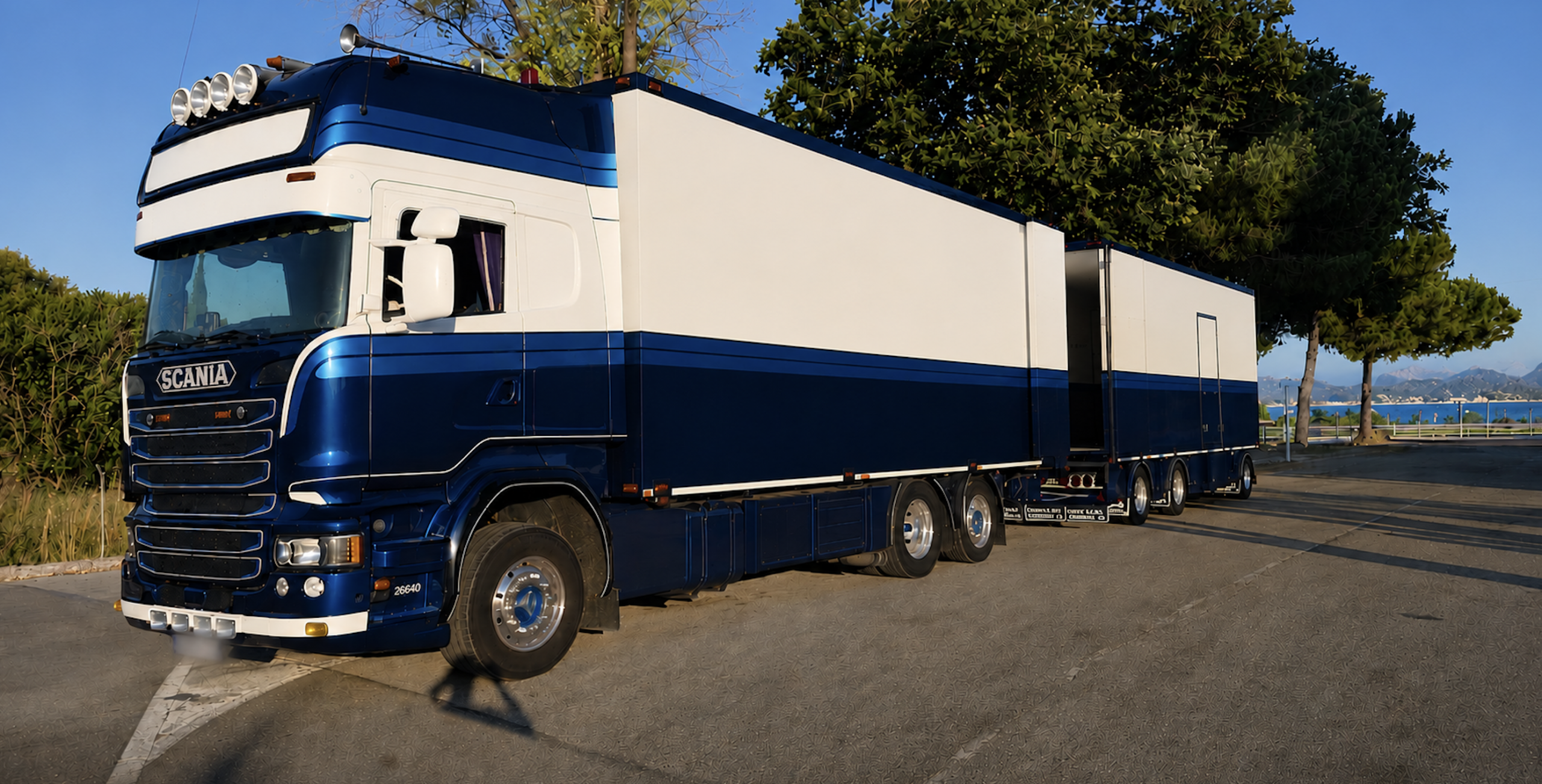
FTL, on the other hand, dedicates an entire vehicle to a single shipper. The truck loads directly at the pickup location and delivers directly to the destination, without cross-docking, intermediate handling, or consolidation.
Groupage shipping is generally the most suitable option when your shipment does not justify the use of a full truck, typically for loads below 5 to 6 pallets or less than 3,000 to 5,000 kg, depending on the configuration.
It is also a relevant choice when delivery deadlines are flexible. Because shipments pass through a consolidation hub, transit times are naturally longer. For non-urgent shipments between well-served logistics platforms, this additional transit time is often acceptable in exchange for significant transport cost savings.
LTL is particularly well suited to regular shipments of modest volumes, especially for companies supplying customers through continuous flows without ever filling an entire truck.
A full truckload becomes the preferred option once shipment volume exceeds a certain threshold, generally from 15 to 20 pallets onward, or when the weight approaches the vehicle's maximum payload. Beyond this point, FTL often becomes cost-competitive and can even be less expensive than a heavily loaded LTL shipment.
However, volume is not the only criterion. FTL is strongly recommended for:
Sensitive or high-value goods. Every handling operation creates additional risk, including damage, mixing with other shipments, or exposure to varying storage conditions. A dedicated truck eliminates these risks. For works of art, precision equipment, luxury goods, and other valuable cargo, uninterrupted custody is often essential.
Time-critical deliveries. An FTL shipment travels directly from origin to destination without intermediate stops. This provides greater control over transit times, with agreed departure and delivery schedules.
Oversized or specialized cargo. Certain shipments, such as industrial machinery, event equipment, or vehicles, require specific equipment (flatbed trailers, tautliners, low-loaders, etc.) and cannot be integrated into a groupage network.
Shipments requiring complete confidentiality. In sectors such as luxury, defence, and healthcare, routing goods through a shared logistics platform may not be appropriate. FTL offers a level of discretion that groupage transport cannot guarantee.
Before choosing between LTL and FTL, consider the following questions:
There is no universal answer. The choice between LTL and FTL depends on a combination of factors including shipment volume, delivery deadlines, cargo value, and operational constraints.
An experienced logistics provider can help determine the most suitable option and adapt it as circumstances evolve.
At WES, our teams assess every request individually to recommend the most efficient transport solution, whether for groupage shipments within France or dedicated international freight services.
Share this article on :